
Introduction
For many self-employed individuals in the UK, managing taxes can feel overwhelming. Among the most important responsibilities is understanding sole trader VAT registration. When it’s required, how to register, and how to stay compliant with HMRC rules. Whether you’re just starting out or you’ve been trading for years, knowing your VAT obligations ensures you avoid penalties and maximise your business credibility.
This guide will cover everything: from the VAT registration threshold to the step-by-step application process, record-keeping, filing VAT returns, and practical tips for compliance.
What is VAT and Why Does it Matter for Sole Traders?
Value Added Tax (VAT) is a consumption tax charged on most goods and services in the UK. For sole traders, it plays a critical role because it affects pricing, competitiveness, and compliance with HMRC.
When you complete sole trader VAT registration, you essentially become a tax collector on behalf of HMRC. You charge VAT on your sales (known as “output tax”) and reclaim VAT you pay on eligible business expenses (known as “input tax”). The net amount is either paid to HMRC or refunded back to you depending on your business’s VAT position.
Why Sole Traders Should Care About VAT
- Legal Requirement – Once your turnover crosses the UK VAT registration threshold (£90,000 as of 2024/25), you must register. Failure to do so can result in penalties.
- Business Reputation – Some clients, especially B2B, prefer working with VAT-registered businesses as it signals credibility and scale.
- Cashflow Impact – VAT can improve or strain cashflow depending on your sector. Reclaiming VAT on expenses may reduce costs, while charging VAT may increase prices.
- Growth Planning – Even if you’re under the threshold, voluntary VAT registration can sometimes be strategic—particularly for businesses with significant expenses.
Understanding the fundamentals of VAT ensures that when it comes to sole trader VAT registration, you approach it with clarity and confidence rather than confusion.
When Does a Sole Trader Need to Register for VAT?
The timing of sole trader VAT registration is not optional once you hit HMRC’s thresholds. Missing a registration deadline can lead to penalties, interest, and backdated VAT liabilities.
The VAT Registration Threshold
- The current threshold (2024/25 tax year) is £90,000 in taxable turnover over a rolling 12-month period.
- This threshold applies to most goods and services, excluding VAT-exempt items (such as education, insurance, and certain health services).
- The “rolling 12 months” means you must continuously monitor turnover—not just at year-end.
Compulsory VAT Registration Triggers
You must register for VAT if:
- Your taxable turnover exceeds £90,000 in any rolling 12-month period.
- You expect your turnover to exceed £90,000 within the next 30 days (for example, if you sign a large contract).
- You purchase goods worth more than £85,000 from the EU (though post-Brexit rules have slightly altered this scenario).
Voluntary VAT Registration
Even if your turnover is below the threshold, you can opt for voluntary sole trader VAT registration. Many self-employed professionals choose this to:
- Reclaim VAT on startup costs and business expenses.
- Work with VAT-registered clients who expect VAT invoices.
- Improve cashflow management through VAT refunds.
Deregistration
If your turnover falls below the £88,000 deregistration threshold, you can apply to deregister. However, this decision should be weighed carefully, especially if your clients are VAT-registered and reclaim VAT from your invoices.
Being proactive about VAT registration deadlines keeps you compliant and prevents HMRC penalties.
How to Register for VAT as a Sole Trader
Completing sole trader VAT registration is a straightforward process if you know the steps. HMRC has streamlined the system so most applications are completed online. However, accuracy is crucial — errors can delay registration or create compliance issues later. Here are the VAT registration requirements
Step 1: Check Eligibility
Before applying, confirm whether you:
- Have exceeded the VAT registration threshold (£90,000).
- Expect to exceed it within 30 days.
- Intend to register voluntarily to reclaim VAT or enhance credibility.
Step 2: Gather the Required Information
When applying online, you’ll need to provide:
- Your Unique Taxpayer Reference (UTR).
- National Insurance number.
- Business bank account details.
- Estimated turnover.
- Details of your business activities.
Step 3: Apply Online via HMRC
- Visit HMRC’s VAT Registration Service.
- Log in using your Government Gateway ID (or create one if you don’t have it).
- Complete the VAT1 form electronically.
Step 4: Await VAT Number
Once your application is processed, HMRC will issue a VAT registration certificate. This confirms:
- Your VAT number.
- The date of registration (effective date).
- Your deadline for the first VAT return.
You must not charge VAT on invoices until you receive your VAT number, though you can backdate VAT invoices once you have it.
Step 5: Update Your Business Systems
After registering, ensure:
- All invoices include your VAT number.
- Your bookkeeping system can record input and output VAT.
- You are ready to submit digital VAT returns under Making Tax Digital (MTD) requirements.
VAT Schemes Available for Sole Traders
Once you complete sole trader VAT registration, HMRC allows you to choose from several VAT schemes. The scheme you select can affect your cashflow, administrative workload, and even the amount of VAT you pay.
1. Standard VAT Accounting Scheme
This is the default option. Under this scheme:
- You charge VAT on sales and reclaim VAT on purchases.
- VAT is reported on the invoice date, not the payment date.
- Returns are normally submitted quarterly under Making Tax Digital (MTD).
Best for: Sole traders with steady cashflow who don’t mind detailed bookkeeping.
2. Flat Rate Scheme (FRS)
The Flat Rate Scheme simplifies VAT by letting you pay HMRC a fixed percentage of your turnover.
- You still charge VAT at the standard rate (e.g. 20%) to your customers.
- But you only pay HMRC a set percentage (e.g. 14.5% for IT contractors).
- You keep the difference, but you can’t reclaim VAT on most purchases.
Best for: Service-based sole traders with low expenses who want less admin.
3. Cash Accounting Scheme
With Cash Accounting:
- You only pay VAT when customers pay you.
- You reclaim VAT on purchases when you pay suppliers.
This protects cashflow for businesses where clients take time to settle invoices.
Best for: Sole traders with slow-paying customers or variable income.
4. Annual Accounting Scheme
Instead of quarterly returns, you file one VAT return per year.
- Payments are made in installments throughout the year.
- You reconcile at the end of the period.
Best for: Sole traders who prefer simplicity and predictable payments.
VAT Compliance Responsibilities for Sole Traders
Completing sole trader VAT registration is only the start. Staying compliant with HMRC rules is an ongoing responsibility. Failure to follow VAT requirements can result in penalties, interest, or even an HMRC investigation.
Accurate Record-Keeping
Sole traders must maintain detailed records for at least six years. These include:
- Sales invoices showing VAT charged.
- Purchase invoices showing VAT paid.
- Credit notes and debit notes.
- Import/export documentation (if applicable).
Under Making Tax Digital (MTD), records must be kept digitally using compatible software (e.g. Xero, QuickBooks, FreeAgent).
VAT Invoicing Rules
Every VAT invoice you issue must include:
- Your business name and address.
- Your VAT registration number.
- Invoice date and unique invoice number.
- Description of goods/services.
- VAT rate applied (standard, reduced, or zero-rated).
- Total VAT charged.
Errors on invoices can cause problems for both you and your clients, so accuracy is key.
VAT Returns
- Normally submitted quarterly.
- Must be filed online under MTD.
- Payment deadlines are one month and seven days after the VAT period ends.
Penalties for Non-Compliance
HMRC may issue penalties for:
- Late VAT registration.
- Errors in VAT returns.
- Late filing or late payment.
- Failure to comply with MTD requirements.
Interest charges can also apply, further increasing costs.
Common Compliance Mistakes to Avoid
- Claiming VAT on personal expenses.
- Forgetting to deregister when turnover drops below the threshold.
- Charging VAT before receiving a VAT number.
- Not applying the correct VAT rate on mixed supplies.
Compliance is about consistency. By setting up the right systems early, sole traders can manage VAT obligations smoothly and avoid HMRC penalties.
VAT Returns and Payments: What Sole Traders Need to Know
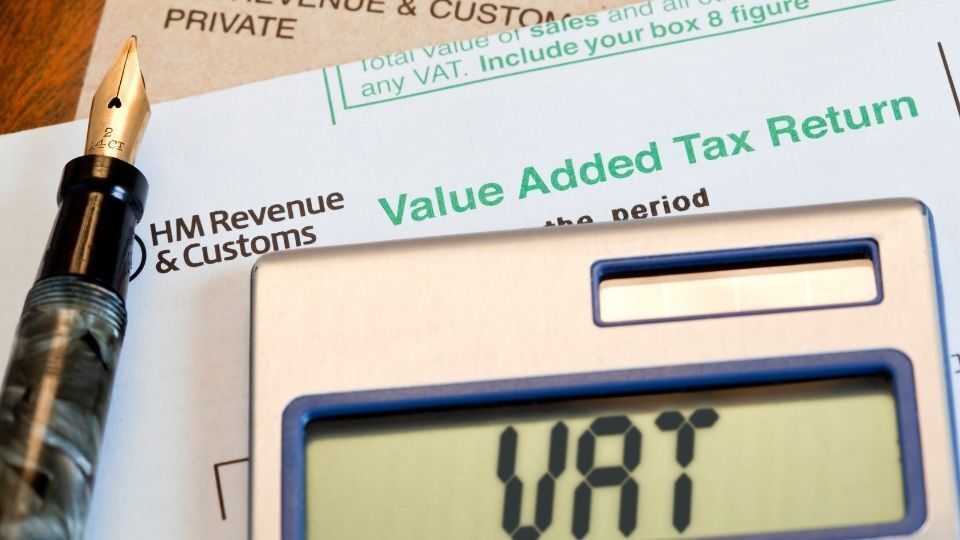
Once you’ve completed sole trader VAT registration, you’ll need to file VAT returns regularly. This is how you report VAT charged on sales and VAT paid on expenses, then settle the balance with HMRC.
Filing VAT Returns
- Frequency: Most sole traders must file quarterly VAT returns.
- Method: Returns must be filed digitally through Making Tax Digital (MTD) compliant software.
- Deadline: One calendar month and seven days after the end of your VAT accounting period.
Missing deadlines can trigger penalties and interest, so it’s wise to set reminders.
How VAT Liability is Calculated
- Output VAT: The VAT you charge customers.
- Input VAT: The VAT you pay on business expenses.
- VAT Payable/Refundable: Output VAT minus Input VAT.
If Output VAT > Input VAT, you pay HMRC.
If Input VAT > Output VAT, HMRC may issue you a refund.
Paying VAT to HMRC
- Payment is usually due by the VAT return deadline.
- Common payment methods include Direct Debit, bank transfer, debit/credit card, or via your accounting software.
- Ensure payments clear on time — HMRC counts the date the funds reach them, not when you send it.
Reclaiming VAT on Expenses
Sole traders can reclaim VAT on legitimate business expenses such as:
- Office supplies and equipment.
- Professional services (accountancy, legal, consultancy).
- Business travel (subject to restrictions).
- Certain vehicle costs if used for business.
However, you cannot reclaim VAT on:
- Non-business or personal expenses.
- Entertainment expenses.
- Most cars (unless exclusively for business use).
Late Returns and Payments
HMRC operates a points-based penalty system:
- Each missed deadline adds a penalty point.
- Reaching a points threshold triggers a financial penalty.
- Late payments also attract interest, compounding the cost of non-compliance.
Staying disciplined with VAT returns is essential — a single missed filing can set off a chain of administrative headaches.
Common Challenges Sole Traders Face with VAT
While sole trader VAT registration brings legal compliance and sometimes financial benefits, it also introduces new complexities. Many self-employed professionals struggle with the ongoing demands of VAT once registered.
1. Cashflow Strain
- Collecting VAT means holding money that ultimately belongs to HMRC.
- If clients pay late, you may still owe VAT before receiving payment.
- This is particularly tough for sole traders without large cash reserves.
- Using the Cash Accounting Scheme can help mitigate this issue.
2. Complex VAT Rules
VAT is not always straightforward. Complications arise when:
- Supplying goods or services internationally.
- Dealing with reduced or zero-rated VAT supplies.
- Handling mixed-use expenses (business and personal).
These scenarios often require specialist advice to avoid misreporting.
3. Administrative Burden
- MTD requires digital record-keeping, which may be new for some sole traders.
- Bookkeeping time increases significantly after VAT registration.
- Sole traders often underestimate the extra admin workload.
4. Sector-Specific VAT Challenges
- Construction: CIS rules interact with VAT in confusing ways.
- Hospitality: Different VAT rates apply to food, alcohol, and accommodation.
- Digital Services: Cross-border VAT rules (such as VAT MOSS) add complexity.
5. Risk of Errors and Penalties
Even small mistakes — such as charging VAT before receiving a VAT number or reclaiming VAT on ineligible expenses — can lead to costly penalties. HMRC often takes a strict approach, especially if errors look deliberate.
6. Business Perception
Some sole traders worry that registering for VAT will make them less competitive, as adding 20% VAT to invoices could price them out of the consumer market. This is a real issue for B2C businesses where customers cannot reclaim VAT.
Benefits of Sole Trader VAT Registration
Although some self-employed professionals see VAT as an administrative headache, sole trader VAT registration can bring significant advantages. When managed effectively, it can improve business finances, credibility, and long-term growth opportunities.
1. Ability to Reclaim VAT on Expenses
- One of the biggest benefits is reclaiming VAT on purchases.
- This includes office equipment, software, professional services, and business-related travel.
- For sole traders with high startup or ongoing costs, reclaiming VAT can significantly reduce expenses.
2. Enhanced Business Credibility
- VAT registration signals that your business has reached a certain turnover level or operates professionally, even if you register voluntarily.
- Many B2B clients prefer dealing with VAT-registered suppliers, as it makes reclaiming VAT straightforward for them.
- In some industries, being VAT-registered is almost expected.
3. Potential Cashflow Advantage
- Depending on your VAT scheme, you may benefit from temporary cashflow boosts.
- For example, under the Flat Rate Scheme, you keep the difference between the VAT charged and the flat percentage paid to HMRC.
4. Growth-Ready Business
- Registering for VAT early helps future-proof your business.
- You avoid the stress of rushing registration when turnover suddenly exceeds the threshold.
- Having VAT systems in place supports scaling without compliance risks.
5. Competitive Edge with Larger Clients
- Some corporate clients only work with VAT-registered suppliers.
- Registering voluntarily can open doors to contracts you might otherwise miss.
6. Professional Record-Keeping
- VAT registration forces you into structured bookkeeping under Making Tax Digital (MTD).
- While it increases admin, it also results in better financial records, which can help with loan applications, investment, and business planning.
Frequently Asked Questions
1. What is sole trader VAT registration?
Sole trader VAT registration is the process by which a self-employed individual registers with HMRC to charge VAT on sales and reclaim VAT on eligible expenses. Once registered, a sole trader becomes responsible for collecting VAT on behalf of HMRC and submitting VAT returns.
2. When does a sole trader need to register for VAT?
You must complete sole trader VAT registration when your taxable turnover exceeds the VAT threshold of £90,000 in a rolling 12-month period. You must also register if you expect turnover to exceed this threshold within the next 30 days, or if you purchase more than £85,000 of goods from outside the UK.
3. Can I register for VAT voluntarily as a sole trader?
Yes. Voluntary sole trader VAT registration is common for businesses with high expenses or B2B clients. By registering voluntarily, you can reclaim VAT on business costs and potentially improve your professional credibility.
4. How do I apply for sole trader VAT registration?
You can complete sole trader VAT registration online via HMRC’s VAT Registration Service. You’ll need your Unique Taxpayer Reference, National Insurance number, and details about your business activities. Once approved, HMRC will issue your VAT number and confirm your registration date.
5. What happens if I don’t register for VAT as a sole trader?
Failing to complete sole trader VAT registration when required can result in HMRC penalties, backdated VAT bills, and interest charges. HMRC may also view non-registration as deliberate non-compliance, which carries harsher fines.
6. What VAT schemes are available after sole trader VAT registration?
Sole traders can choose from several schemes after VAT registration, including:
- Standard VAT Accounting Scheme
- Flat Rate Scheme
- Cash Accounting Scheme
- Annual Accounting Scheme
Each has advantages depending on your turnover, expenses, and cashflow.
7. How do I charge VAT once registered?
After sole trader VAT registration, you must issue VAT invoices that include your VAT number, the VAT rate applied, and the total VAT charged. You cannot legally charge VAT until HMRC confirms your VAT number, but you may backdate invoices once it’s received.
8. Can I reclaim VAT on all business expenses?
Not all expenses qualify. After sole trader VAT registration, you can reclaim VAT on most business-related goods and services, but not on personal use items, entertainment costs, or most cars unless used exclusively for business.
9. How often do I need to file VAT returns?
Sole traders usually submit quarterly VAT returns under Making Tax Digital. However, after sole trader VAT registration, you may opt for the Annual Accounting Scheme, filing only once per year while paying instalments.
10. Do I have to use software after VAT registration?
Yes. Sole trader VAT registration brings an obligation to comply with Making Tax Digital (MTD). You must use HMRC-approved accounting software to keep digital records and submit VAT returns.
11. What if my turnover falls below the threshold after registration?
If turnover falls below £88,000, you may apply for VAT deregistration. However, deregistering may not always be beneficial, especially if your clients are VAT-registered businesses that reclaim VAT from your invoices.
12. How long does sole trader VAT registration take?
The HMRC process usually takes 10–30 working days, depending on your circumstances. During this period, you cannot charge VAT but must keep records so you can issue corrected invoices once your VAT number arrives.
13. Is sole trader VAT registration beneficial for small businesses?
Yes, in many cases. While sole trader VAT registration increases admin, it allows you to reclaim VAT, enhances business credibility, and makes you eligible for contracts with larger clients. However, B2C sole traders should weigh the risk of higher consumer prices.
14. What penalties apply if I miss VAT deadlines?
After sole trader VAT registration, failing to file returns or pay VAT on time results in a points-based penalty system. Repeated failures lead to financial penalties and interest charges. HMRC also imposes fines for errors in returns.
15. Can I backdate sole trader VAT registration?
Yes. In some cases, you can request backdated sole trader VAT registration to reclaim VAT on business expenses incurred before registration. HMRC allows this if you meet the conditions for earlier registration.
Take Control of Sole Trader VAT Registration
VAT doesn’t have to be a stumbling block. With the right approach, sole trader VAT registration can strengthen your business, reduce costs, and build long-term credibility. But compliance is complex — from understanding thresholds to choosing schemes, filing accurate returns, and avoiding HMRC penalties.
At The Taxcom, we specialise in helping sole traders navigate VAT registration and compliance with confidence. Whether you need guidance on registering with HMRC, setting up VAT schemes, or managing digital record-keeping under Making Tax Digital, our team ensures you stay compliant while focusing on running your business.
Take the stress out of VAT. Contact The Taxcom today and let us handle the details while you focus on growth.